The wafer-type valve design is used for special globe and butterfly valve applications; wafer-type valves feature the shortest face-to-face lengths of all valve types (also see Valve).
The warranty tolerance is the permissible level of deviation from the value guaranteed by the manufacturer. It corresponds to the total tolerance specified in the acceptance test standard DIN EN ISO 9906, which is also referred to as the acceptance tolerance.
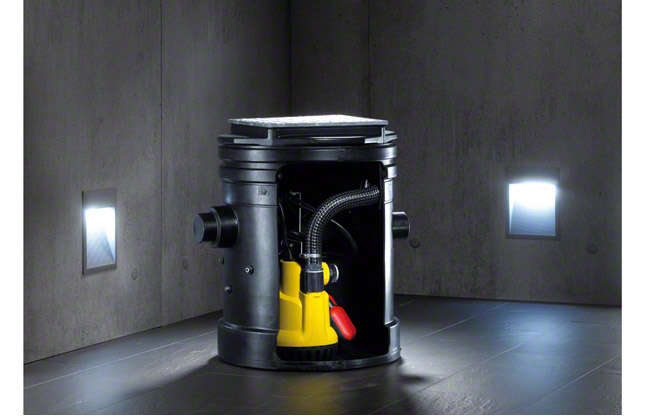
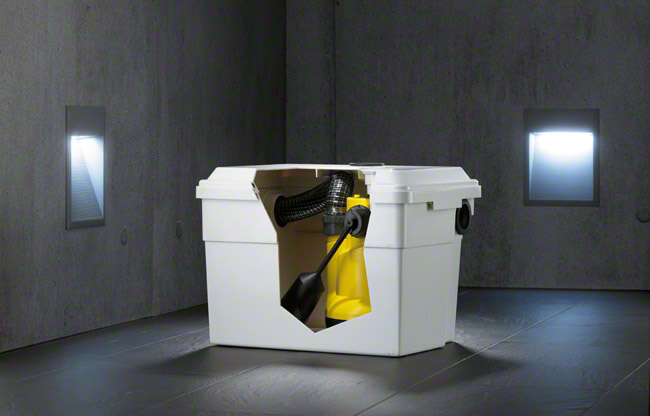
Waste water lifting units serve to automatically drain water from washbasins, showers, washing machines and, on a larger scale, from buildings and premises. The fluid handled can be any type of contaminated water. Waste water lifting units are composed of a plastic collecting tank with an integrated submersible motor pump which starts and stops automatically. They are available as single-pump or dual-pump units.
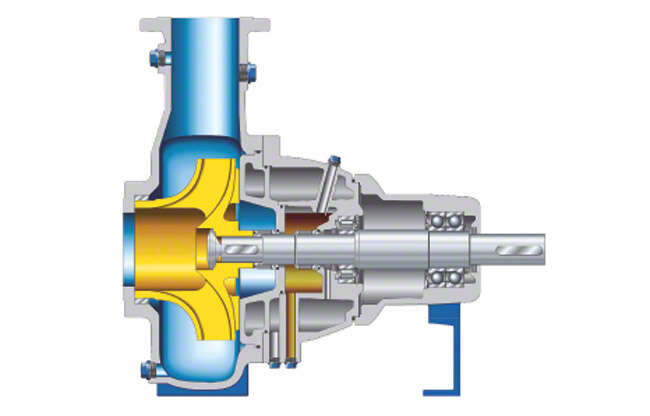
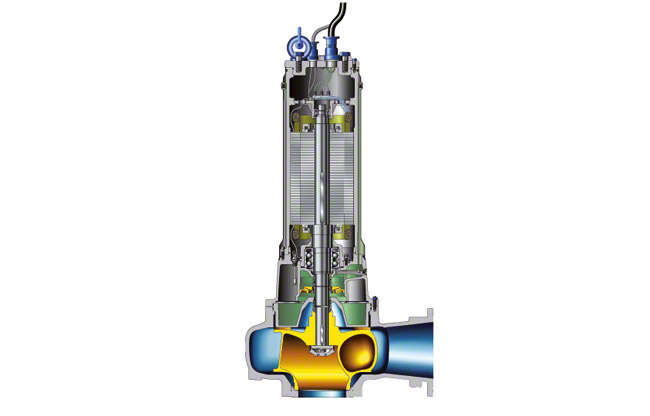
Waste water pumps transport heavily contaminated water which often contains solid particles of various organic, inorganic and mineral origin. Single-stage designs are preferable. Waste water pumps are generally not self-priming. They are completely submerged in the fluid handled. Wear-resistant mechanical seals are used as a shaft seal.
Typical applications are those of the food processing, construction, pulp and paper, sugar, and metal industries (e.g. metal electrolysis) as well as mining and water extraction (e.g. cooling water, seawater desalination). A distinction is made between municipal and industrial waste water pumps as the requirements differ considerably. Municipal waste water pumps, also referred to as sewage pumps, typically transport the following fluids: raw sewage (e.g. waste water, sewage, see Sewage pump), mechanically treated waste water from treatment tanks, sludge (e.g. activated, raw, digested and return activated sludge) as well as stormwater.
For industrial waste water pumps the selection of suitable materials is crucial as industrial waste water can be highly aggressive or abrasive (see Abrasion). The pump casing can be especially fitted with casing wear rings or wear plates which are made of particularly wear-resistant materials and can be easily replaced.
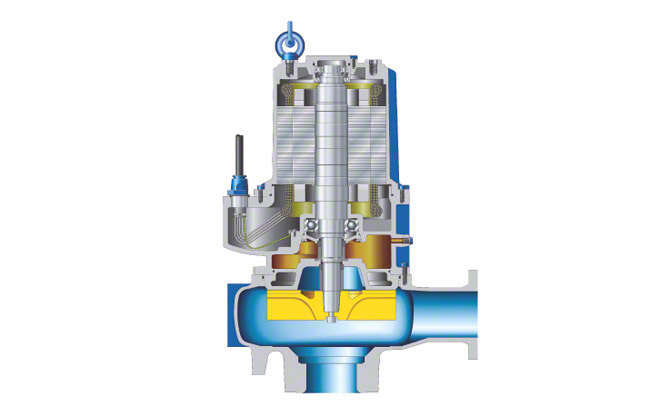
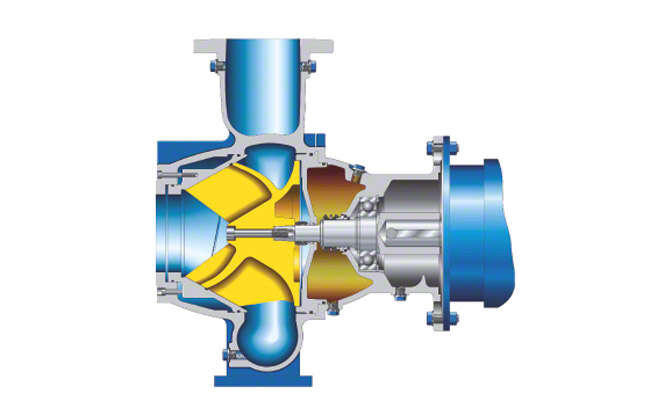
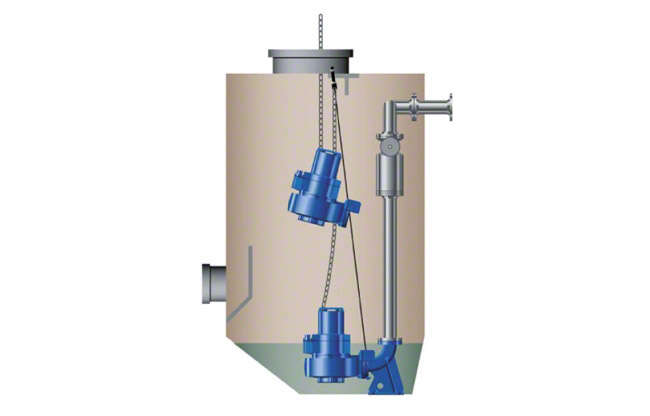
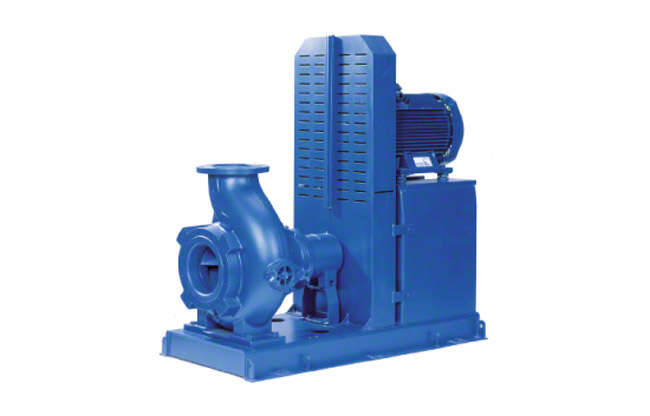
Waste water pumps can be designed for either wet well or dry installation. Waste water pumps for wet well installation are also referred to as submersible motor pumps. See Figs. 2, 3, 5 Waste water pump
Water consumption generally means the consumption of water in the domestic environment. By comparing water consumption levels it is possible to identify regional differences.
Domestic water consumption in Germany is approximately 10 per cent of total water consumption, by far the greater proportion being accounted for by industry and power plants.
Water hammer describes a violent surge pressure in a pipe when two water columns collide after a temporary separation of fluid columns in the piping as a result of gas separation, and/or vaporisation due to a pressure drop followed by a pressure rise. Water hammer may also occur if a valve closes too quickly (see surge pressure).
The hardness of water is defined as the presence of ions of alkaline earth metals dissolved in the water and their anionic partners. The degree of hardness is determined by the pH value and is given as the concentration of calcium (Ca2+) and magnesium ions (Mg2+), and - in some special cases (e.g. seawater) - of strontium and barium ions. Since these ions form insoluble, unwanted compounds (lime, lime soaps), the water hardness must be taken into account during planning.
Hydrogen carbonate hardness (previously known as carbonate hardness) is the amount of "hardness ions" which are equivalent to the amount of hydrogen carbonate and carbonate ions in the water (i.e. the amount of Ca(HC03)2). The hardness of the water is given as the molar concentration of hardness ions in the water, expressed in mmol/l.
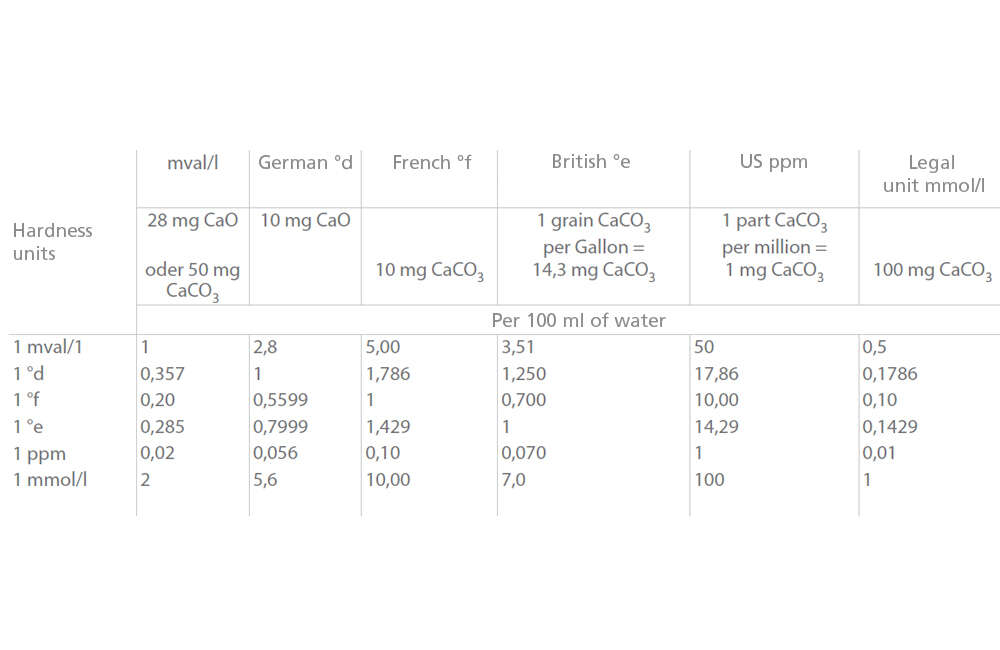
There is a correlation between hardness expressed in the legal unit mmol/l, and the former nationally and internationally used degrees of hardness. See Fig. 1 Water hardness
Fig. 1 Water hardness: Conversion of hardness levels and units (to DIN 38409, Part 6)
Water hardness is also relevant to the formation of an anti-corrosive, chalky rust film and the proneness to scale deposition. This formation of deposits is prevented in service and cooling water supplies by softening (e.g. removing the substances causing hardness), adding polyphosphates, or using complexing agents.
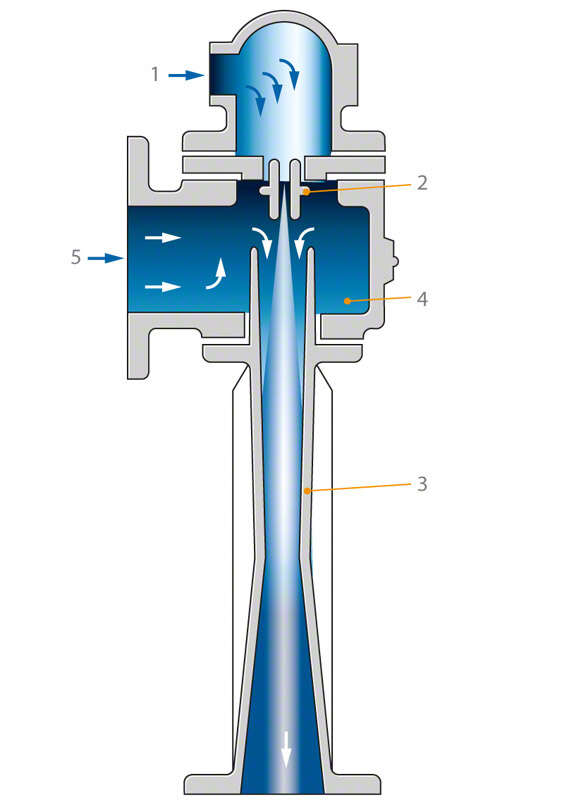
It is often also used as the priming stage for pumps of lower ratings such as garden pumps or domestic water supply systems. It operates in the same way as a eductor-jet pump.
The water requirement is the quantity of water needed by a machine or device for the successful completion of a certain process, e.g. in a cooling circuit (see Water consumption).
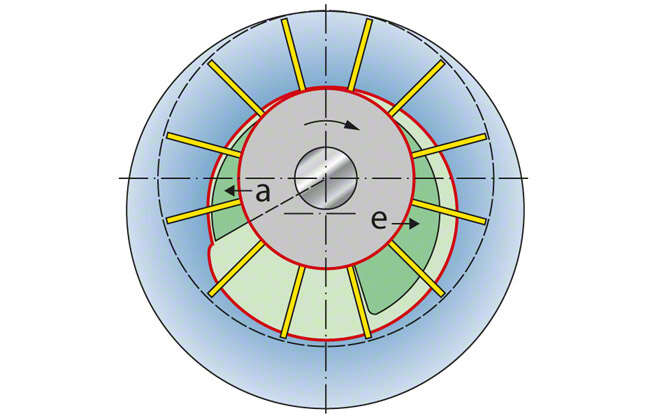
Water ring pumps are liquid ring pumps which work according to the principle of positive displacement (see Positive displacement pump) when partly filled with gas, like side channel pumps Their self-priming capabilities are very good (seeSelf-priming pump). See Fig. 1 Water ring pump
Fig. 1 Water ring pump: Position of water surfaces in the individual blade cells; a Outlet; e Inlet
A star-shaped impeller (see Star impeller) rotates eccentrically in a casing, partially filled with liquid, generating a liquid ring with a free surface. The vanes of the star impeller dip into this liquid ring (often a water ring) at varying depths during the course of a revolution. This causes the formation of gas-filled cavities between the vanes and the surface of the liquid. The cavities increase and decrease alternately. In this operating condition the water ring pump is suitable for pumping gas.
When the gas feed ceases (e.g. when the suction line, has been evacuated completely), the water ring pump starts pumping liquid. In this operating mode pump efficiency is usually only moderate. For this reason, priming aids of this type, e.g. for self-priming marine pumps, are stopped manually or automatically when the evacuation process is completed. They are isolated from the suction line, which is now filled with water, and vented. This minimises the power input required for the star impellers.
The effectiveness of a water ring pump is very much dependent on the sealing between star impeller and casing. Narrow clearances at the two flat faces of the casing which accommodate the suction and discharge openings are essential.
Liquid ring pumps are not only used as priming aids for centrifugal pumps but also as vacuum pumps or compressors in the chemical industry.
They are particularly advantageous when the gas to be pumped has to be humidified or compressed without increasing the temperature. An example would be chlorine electrolysis processes in which chlorine gas is isothermally compressed and, simultaneously, scrubbed by concentrated sulphuric acid used as a liquid ring.
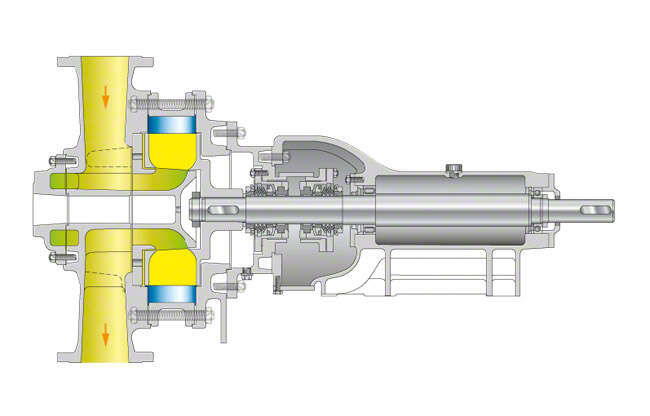
At this liquid ring compressor the top and bottom casing halves are designed as eccentric mirror images of each other, so that the star impeller with forward-curvature vanes aspirates and compresses twice per revolution and the compressed gas leaving the discharge nozzle entrains a small amount of liquid. The liquid is then separated from the gas in a separator and cooled by a heat exchanger before being returned to the compressor to maintain the liquid ring. See Fig. 2 Water ring pump
Fig. 2 Water ring pump: Liquid ring compressor (chlorine gas compressor)
The term water supply pump refers to all centrifugal pumps which transport drinking or service water either directly to a supply network or through long-distance pipes to a supply area.
Submersible borehole pumps are installed in wells. They pump the water directly to the network if no water treatment is required: Q up to 3,000 m3/h, H up to 1,400 m
A waterworks pump is a centrifugal pump which is used for the public drinking water supply of municipalities and communities.
Waterworks pumps are characterised by low maintenance costs, decades of high operating reliability and a hygienic design for pumping pure water. Waterworks pumps belong to the family of water supply pumps.
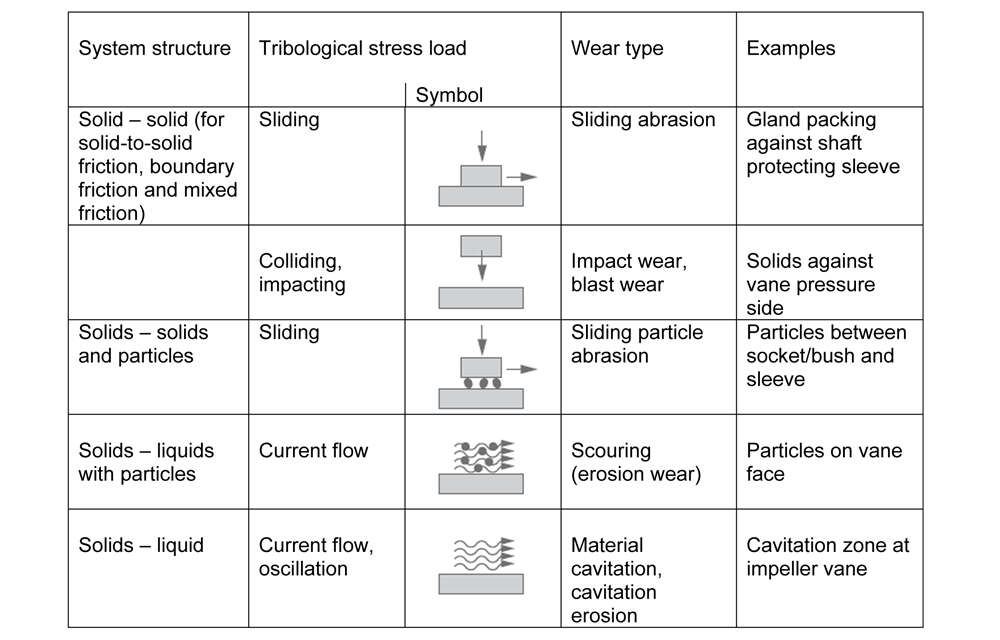
Wear is an attrition phenomenon (i.e. the gradual loss of material from the surface of a solid body) which is caused by mechanical factors such as contact with and motion relative to a solid, liquid or gaseous counter body (see abrasion).
One of the main ways to extend the service life of machines and equipment is to reduce the level of wear. There are various types of wear, but certain types are more common in centrifugal pumps than others. See Fig. 1 Wear
Fig. 1 Wear: Types of wear in centrifugal pumps (i.a.w. DIN 50320)
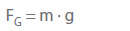
Weight is the force (FG) exerted on a body with mass (m) due to the influence of the acceleration due to gravity (g), according to the formula
The unit of weight is the Newton (N). The weight of a mass, like the acceleration due to gravity depends on geographical location. In everyday discourse, the expression "weight" is frequently used to refer to the corresponding mass (m), of which the unit is the kilogram (kg).
Wet cooling is a cooling process used in power stations. This process comprises a condenser which converts vapour into water by means of a heat exchanger. Cooling can be achieved with fresh water, a cooling tower or a combination of fresh water and cooling tower. An alternative form of cooling is dry cooling. A distinction is made between three wet cooling processes:
Cooling using fresh water
The fresh water used for this cooling type is drawn from a river, lake or the sea. It is pumped through heat exchangers by cooling water pumps and then discharged to the same water bodies. zurückgeleitet.
Cooling via cooling tower
For cooling using a cooling tower, the water is drawn once from a river, lake or the sea depending on the power station's location, and fed into a collecting tank underneath the cooling tower. The water is drawn from there with pumps and transported through heat exchangers, then returned to the collecting tank via the cooling tower. The water lost as a result of evaporation or leakage must be replaced.
Cooling using fresh water and cooling tower
Depending on the heat load capacity of a river or lake, cooling is switched from fresh water to combined fresh water/cooling tower operation. In this case, the cooling water pump must be able to develop the head for both fresh water and cooling tower operation. If this is not feasible for hydraulic reasons, cost-effective operation cannot be achieved. Under these circumstances, other solutions must be considered.
Alternatives providing the required heads for fresh water and cooling tower operation
The cooling circuit is split into a fresh water cooling and cooling tower circuit. This ensures that the water downstream of the heat exchanger is not directly discharged into the river but routed to the cooling tower pumps. They first pump the water through the cooling towers before the cooled water is discharged into the river or directly returned to the cooling water pump.
A wet rotor motor is typically an asynchronous squirrel-cage motor (see Asynchronous motor), whose rotors and bearings are operated in the fluid handled. These motors require special attention during the design, assembly and commissioning stages to ensure that they are reliably filled and vented and that solids in the fluid handled do not reach the fluid-lubricated plain bearings.
Wet rotor motors either have a dry (see Canned motor) or wet stator winding (wet motor).
Wet motor
The wet motor is completely filled with fluid (preferably water). Together with the rotor and bearing, the stator and winding are also submerged along with the supply line connections. All live parts must be protected by water-proof and pressure-tight insulation, however.
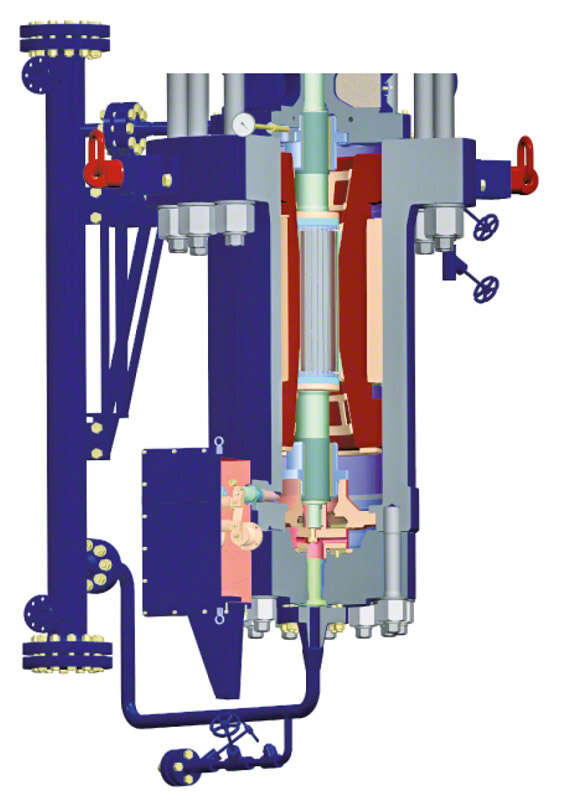
Fig. 1 Wet rotor motor: Glandless recirculation pump with wet motor and water-cooled heat barrier for fossil-fuelled power stations
The power range is approximately 1 kW to 2500 kW (glandless circulating pump) or 3500 kW (submersible motor) for operating voltages that normally peak at 6.6 kV or 10 kV in special cases.
Wet well installation is mainly used for large vertical pumps This means that the pump casing can – or indeed must – be partially or wholly submerged (see Submersible pump).
Wood pulp consists of fine wood fibres. It serves as an important raw material for manufacturing paper and, together with "chemical pulp", is sometimes referred to as fibrous material.
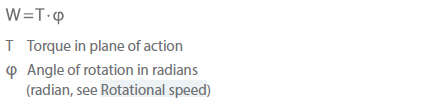
Work (W), as a physical entity, is the energy, used in order to displace a body over a distance (s) by means of a force (F) acting in the direction of the displacement.
When a body is rotated, the mechanical work is:
The quantities of work, energy and heat energy are interchangeable entities in the technical context, defined by the same unit, viz. Joule (J).