

Toward a Zero-Carbon Factory: KSB Shanghai’s Carbon Verification, Product Carbon Footprints, and Renewable Energy Practices
Amid global efforts to tackle climate change, controlling greenhouse gas (GHG) emissions and advancing sustainability have become core corporate responsibilities. Shanghai KSB Pump Co., Ltd. recognizes this imperative and has taken concrete action through organizational GHG inventories and carbon-footprint verification, coupled with a series of measures to curb emissions, contributing to the global climate response.
Ongoing Carbon Verification
China’s “dual-carbon” strategy—peaking emissions and achieving carbon neutrality—guides the nation’s green transition. In 2021, Shanghai KSB engaged the China Quality Certification Center (CQC) to conduct ISO 14064–compliant third-party GHG verification. By auditing and analyzing energy-use data, the company identified energy-saving opportunities and reduced energy consumption to lower CO2 emissions.

Adhering to ISO 14064, KSB Shanghai conducts thorough, data-driven assessments of every emission source across operations. The verification covers Scope 1 direct emissions, Scope 2 indirect emissions from purchased energy, and relevant Scope 3 categories such as logistics and use of sold products. The boundary spans raw material procurement, manufacturing, and product transport. Through multi-year, meticulous verification, the company has built a robust and accurate emissions dataset that underpins effective reduction measures and drives year-on-year abatement.

In 2024, building on organizational verification, the company advanced product carbon footprint (PCF) assessments to meet rising customer expectations and international market requirements. The team analyzed emissions from raw materials and transport, accounting for mode-specific carbon intensities (road, rail, sea) and distance. In manufacturing, it quantified GHG emissions from energy use in production and testing equipment.

PCFs were completed for models ETB 125-100-315 and ETB 100-080-315, which subsequently received CQC product carbon footprint certificates.

These PCFs delivered clear insight into each product’s emission profile, pinpointing hotspots and guiding targeted abatement. They also demonstrate KSB Shanghai’s commitment to green development, enhancing brand reputation and competitiveness. This marks a starting point: the company will extend PCF coverage to more products and, based on findings, implement practical reduction measures—through technology innovation, process optimization, and energy mix adjustments—to deliver lower-carbon, more environmentally friendly products.
Benchmarking the Green Factory: Sustained Green and Low-Carbon Operations
Responding to the sector’s green transition, KSB Shanghai will benchmark the Green Factory criteria and roll out a comprehensive program in 2025 to build a resource-efficient, environmentally friendly modern plant.
Energy management is a priority. Through technical upgrades and management improvements, the company has passed energy management system certification.

Guided by this system, KSB Shanghai has optimized production flows—from equipment selection and process design to energy procurement—while deploying advanced energy monitoring to track consumption in real time and eliminate waste.
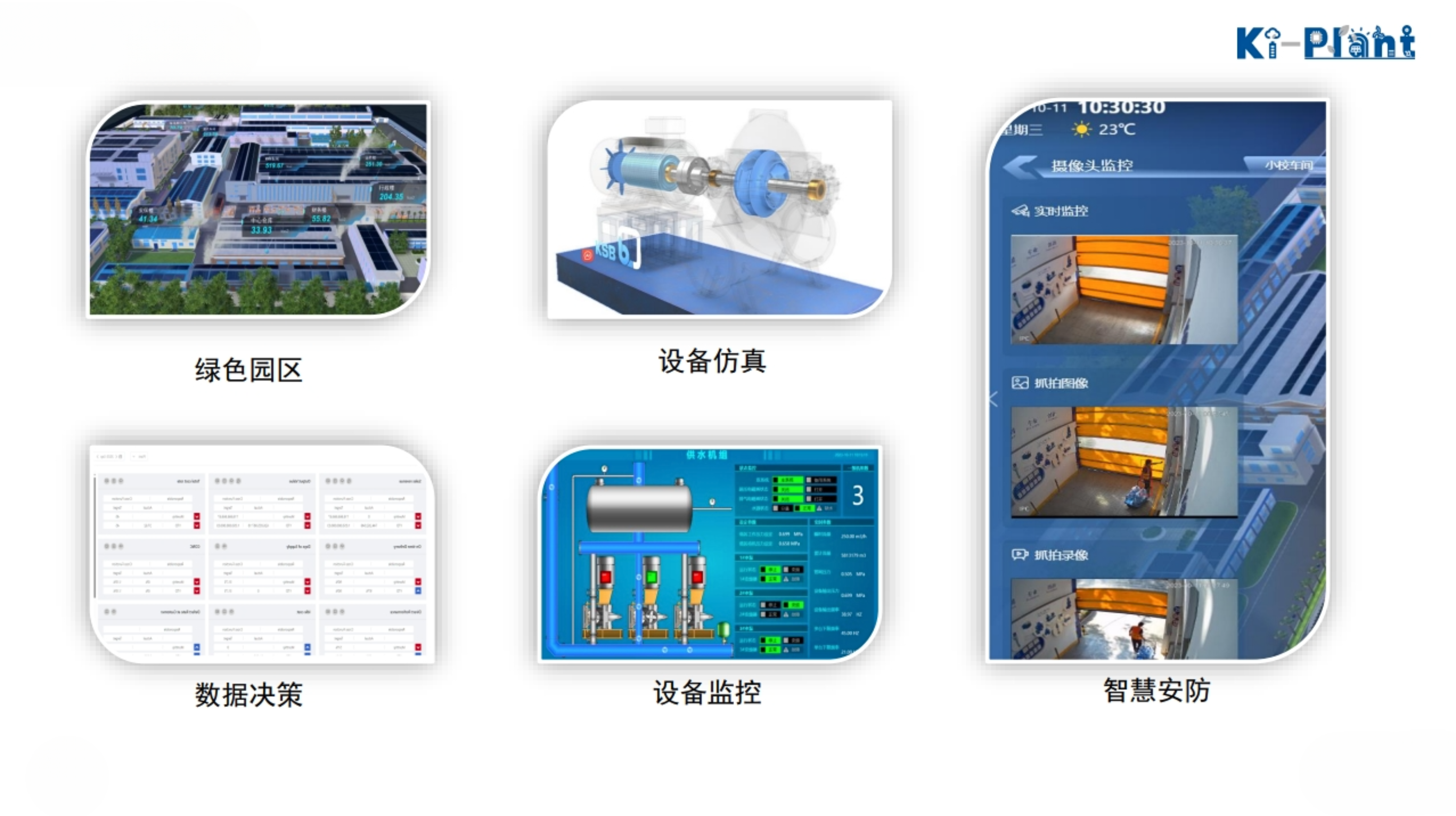
On green energy and resource efficiency:
- In 2021, upgrades to the water supply and drainage network achieved a 50% reduction in water use.
- Rooftop solar PV Phase I was commissioned in September 2023 and Phase II in October 2024. Combined, they generate over 6 million kWh annually, covering more than 50% of the plant’s electricity needs and cutting carbon emissions by 2,000 tonnes per year.
- By end-2024, emissions from electricity, water, and natural gas consumption were down 52% versus 2018—achieving ahead of schedule the KSB Group HQ target of a 30% reduction by 2025 (vs. 2018).
- In 2021, upgrades to the water supply and drainage network achieved a 50% reduction in water use.
- Rooftop solar PV Phase I was commissioned in September 2023 and Phase II in October 2024. Combined, they generate over 6 million kWh annually, covering more than 50% of the plant’s electricity needs and cutting carbon emissions by 2,000 tonnes per year.
- By end-2024, emissions from electricity, water, and natural gas consumption were down 52% versus 2018—achieving ahead of schedule the KSB Group HQ target of a 30% reduction by 2025 (vs. 2018).
In parallel, the company continues to optimize production processes to improve energy efficiency at source, strengthens supplier engagement to build a green supply chain, and ensures low-carbon practices in procurement and logistics. KSB Shanghai also actively shares best practices across the industry to help advance the pump sector toward a more sustainable future.
Outlook
KSB Shanghai will continue to pursue its green, sustainable development strategy and embed the zero-carbon factory into corporate strategy. The company will further strengthen GHG management and control; increase investment in clean energy, process innovation, and supply-chain decarbonization; and explore new reduction technologies to reach more ambitious targets. It will also deepen collaboration with government, academia, and industry to accelerate collective climate action and contribute to a healthier planet.